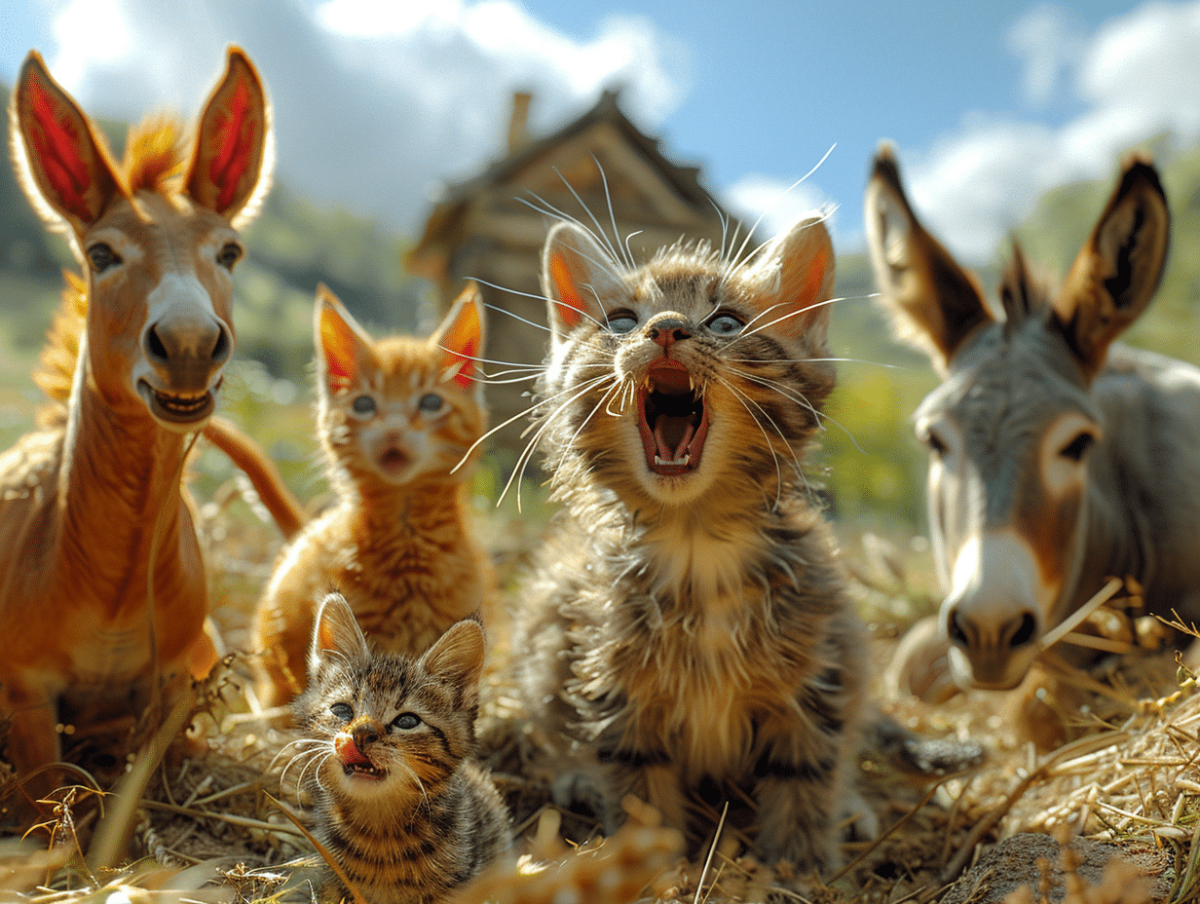
Animal communication has always fascinated scientists. By meticulously observing the vocalizations of various species, from birds to donkeys, including cats, researchers are working to decipher the complex language of our terrestrial companions. These sounds, which may seem simple to the human ear, are actually loaded with meanings and nuances. By studying the frequency, tone, and cadence of these vocalizations, experts attempt to understand how these animals express their needs, emotions, and social interactions, thus opening a window into the intimate world of the wildlife that surrounds us.
The Mechanisms of Animal Communication
Observing animal communication requires paying attention to the various signals it employs. While sound emissions are the most obvious vector, they are just part of the wide range of communication processes. Animals use these signals for a multitude of functions: marking their territory, signaling a threat, establishing social bonds, or even attracting a mate. The communication system varies significantly from one species to another, adapted to their ecological environment and specific needs.
Take, for example, the bray of the donkey, which may sound monotonous to the human ear but is rich in information for its peers. This bray can signal an imminent danger, express discomfort, or serve to locate other members of the group. You must consider the context in which these vocalizations occur to grasp their full significance.
The complexity of signals does not stop at their variety: the ability to interpret them correctly is equally fundamental for the survival of species. Researchers are working to decipher the intrinsic codes of these communications, often drawing inspiration from advances in human linguistics while taking into account fundamental differences.
Indeed, animal communication requires a transdisciplinary approach, combining ethology, acoustics, neuroscience, and even robotics to artificially reproduce these signals. Animal vocalizations, such as bird songs or cat meows, are part of a communication framework that is much more sophisticated than it appears, and their study opens fascinating perspectives on the animal world and its multiple forms of expression.
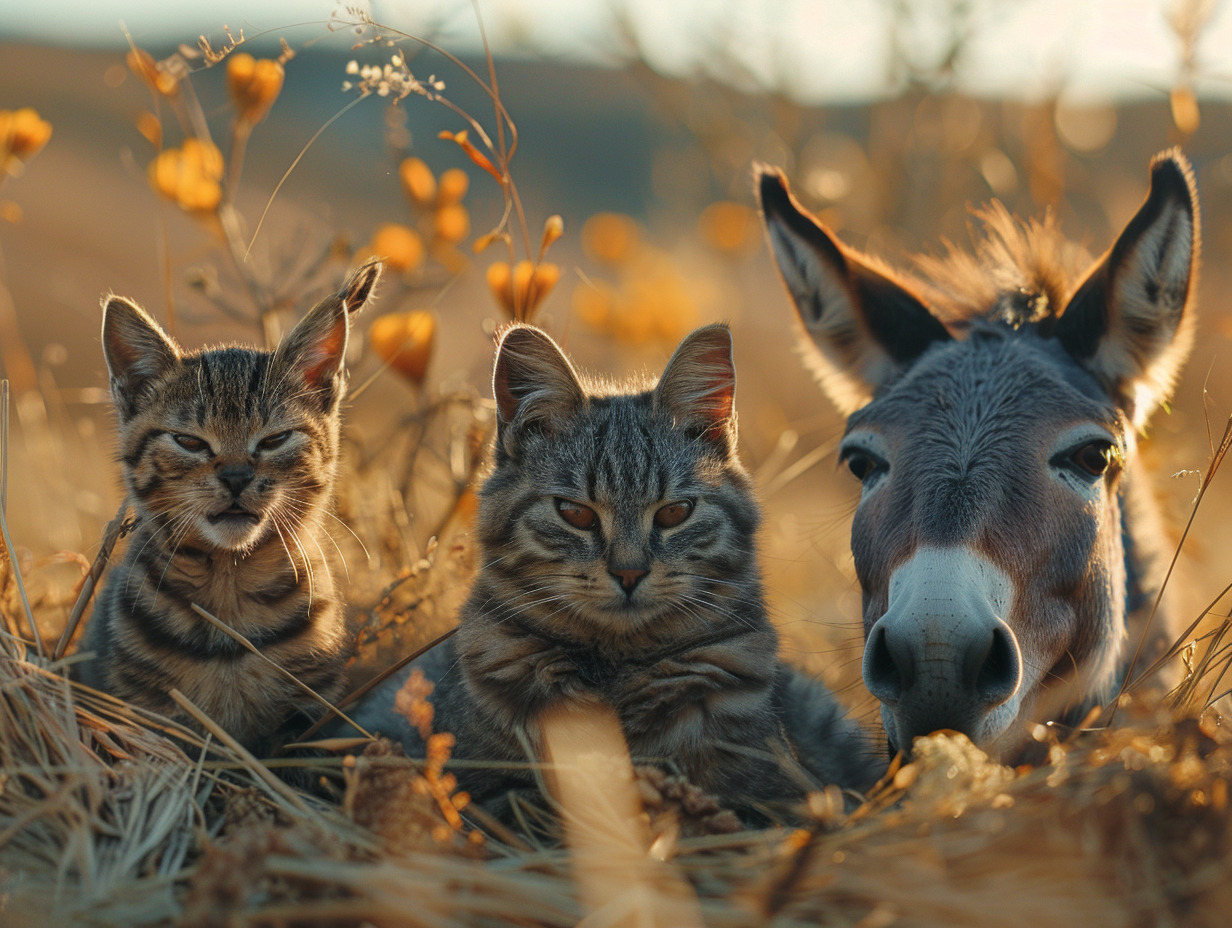
Comparison of Vocalizations Among Different Species
Within the vast field of animal communication, comparing vocalizations between species reveals striking differences and similarities. Among birds, song serves not only as a means of attraction during the mating season but also as a complex tool for marking territory or even exchanging information within a group. The melodic and rhythmic variations of these songs are often specific to each species, or even to each individual, reflecting a linguistic richness in its own right.
In contrast, the vocalizations of cats and dogs, while less melodically elaborate, are nonetheless significant. Meows and barks are adapted to facilitate communication with another species: humans. These cries and barks vary according to the needs or emotions of the animal, such as alerting to danger or expressing contentment. These signals are therefore essential for understanding their behavior.
The concept of ‘Animal Languages’ has long fueled human imagination, particularly in literature where authors like Aristophanes invented languages for winged creatures in works such as ‘The Birds’. These fictional languages, marked by distinct phonological, morphological, and grammatical characteristics, fall within a broader concept of uglossia. This fascination with animal languages leads us to explore imaginary zoosemiotics, a field that studies these invented languages, reflecting our perpetual interest in non-human communication.
The scientific analysis of animal vocalizations strives to go beyond mere fascination to focus on understanding the real mechanisms. Alarm calls, for example, illustrate this approach well. In certain bird species, these calls vary according to the type of approaching predator, demonstrating an ability to convey specific and complex information. The variability of vocalizations within the animal kingdom thus reveals an adaptability and evolution of communication systems that deserve in-depth study to grasp all their subtleties.