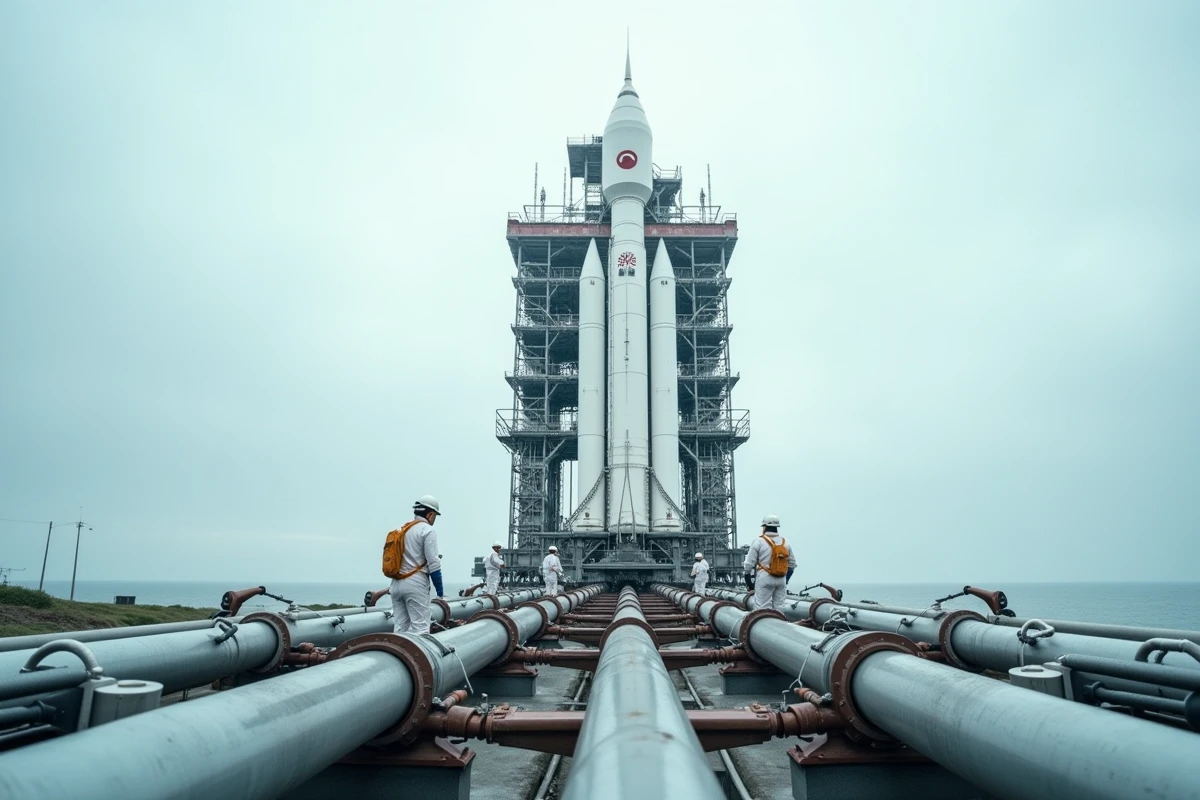
A dozen countries today have the capability to place a satellite in orbit with their own launcher. This exclusive club has slowly expanded since 1957, but the current dynamics, driven by micro-launchers and South-South agreements, are reshaping the map of space powers. Understanding who launches, from where, and with what means sheds light on issues that go far beyond technical prowess.
Autonomous launch capability: what it really means to “be a launching country”
Owning a satellite in orbit is not enough to be considered a space power. The distinction lies in the complete mastery of the launch chain: designing the launcher, having a launch site, and successfully placing it in orbit without external dependence. It is this autonomy that separates countries that purchase launch services from those that provide them.
The recognized list starts with the USSR (1957), followed by the United States (1958), and then France (1965), which became the third country to reach orbit independently. Japan, China, the United Kingdom, India, Israel, and Iran have followed over the decades. South Korea joined this group more recently, after several unsuccessful attempts.
Europe, through the ESA and the Ariane launcher, constitutes a special case: it is an intergovernmental organization, not a single state, but its launch capability from Kourou in French Guiana is very real.
Among the nations launching satellites, not all have the same range of launchers. Some are limited to light payloads in low orbit, while the United States and China cover the entire spectrum, from low orbit to geostationary orbit and beyond.

Micro-launchers and South-South partnerships: the new spatial mapping
The classic mapping of space powers, frozen around a handful of historical actors, is shifting. Several states that had no tradition of launching are now investing in micro-launcher programs, often through hybrid public-private arrangements.
Romania supports the Haas 2CA micro-launcher project, led by the company ARCA and aimed at small payloads in low orbit. Egypt and Tunisia have been participating since 2022 in micro-launcher programs in partnership with European private actors.
These initiatives do not yet confer a fully autonomous launch capability, but they reflect a strategy of upgrading that goes beyond simply purchasing foreign launch services.
Even more significantly, launch agreements are being forged directly between emerging countries, bypassing traditional powers. Argentina and Brazil signed a space cooperation agreement in 2023 that includes sharing launch infrastructures. This type of South-South cooperation alters the balance of power: a country can access orbit without relying on the United States, Russia, or Europe.
What the arrival of the private sector changes
The growing role of companies like SpaceX in the United States has profoundly transformed the launch market. The cost per kilogram launched into orbit has dropped significantly in recent years, making space accessible to more modest national budgets. Countries that could not finance a heavy launcher program can now aim for low orbit with a micro-launcher at a reasonable cost.
This shift illustrates a fundamental trend: space capability is no longer measured solely in launchers but also in constellations and services.
Strategic issues behind satellite launch capability
Launching a satellite with its own launcher is not just a simple engineering feat. It is a lever of sovereignty that touches on defense, telecommunications, Earth observation, and diplomacy.
- Military satellite observation allows for monitoring conflict zones, verifying treaty compliance, and guiding operations. This segment is experiencing sustained growth worldwide.
- Space telecommunications, particularly via low Earth orbit (LEO) constellations, are becoming a key issue for digital access in countries where terrestrial infrastructure remains limited. The LEO satellite market is also expanding rapidly.
- Launch autonomy ensures that a state is not dependent on a foreign provider who may delay, refuse, or condition a launch for geopolitical reasons.
A country that relies on a third party to access orbit accepts a form of strategic vulnerability. This reality drives middle powers to invest significant budgets in their own launch infrastructures, even when the direct economic return remains uncertain.
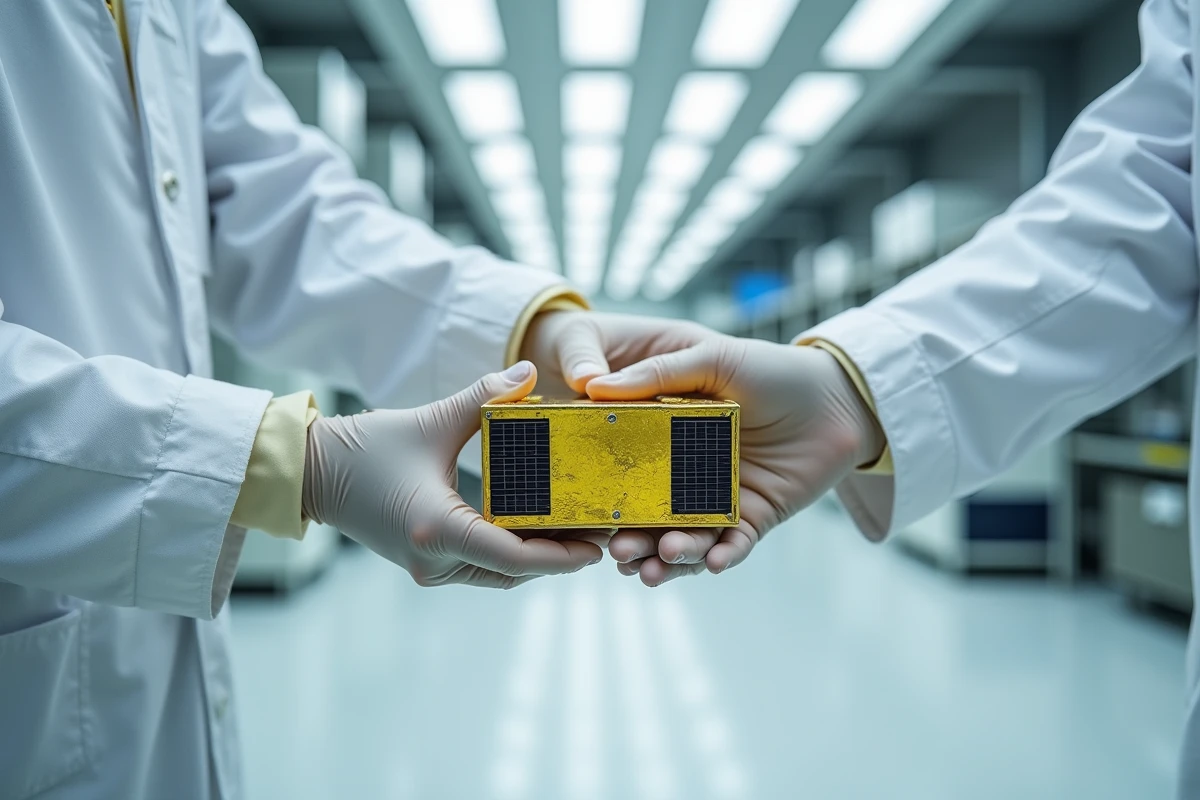
Space bases and geography: why the launch site matters
The location of a launch base is not trivial. The closer a site is to the equator, the more it benefits from the Earth’s rotation speed, which reduces the energy needed to reach orbit. This is one of the major advantages of the Guiana Space Centre in Kourou, located about five degrees north latitude, which serves as a base for the European Ariane and Vega launchers.
Other constraints come into play: the launch trajectory must fly over uninhabited areas (sea or desert) for safety reasons, and the political stability of the host territory is a determining factor in attracting international clients. Geography remains an asset or a handicap that technology can only partially compensate for.
A competition that redefines alliances
Space bases also function as diplomatic tools. Offering a third country the opportunity to launch its satellite from its territory creates a link of technical and political dependence. China employs this strategy in Southeast Asia and Africa, where it offers launch services on competitive financial terms. The United States does the same through commercial contracts with SpaceX and United Launch Alliance.
The increasing number of actors capable of launching satellites is fragmenting a market long dominated by three or four suppliers. This fragmentation has not yet produced a generalized price drop across all segments, but it offers client countries alternatives that did not exist a decade ago. The ability to launch a satellite has become a marker of technological sovereignty as much as a tool of geopolitical influence, and the list of countries claiming it continues to grow.