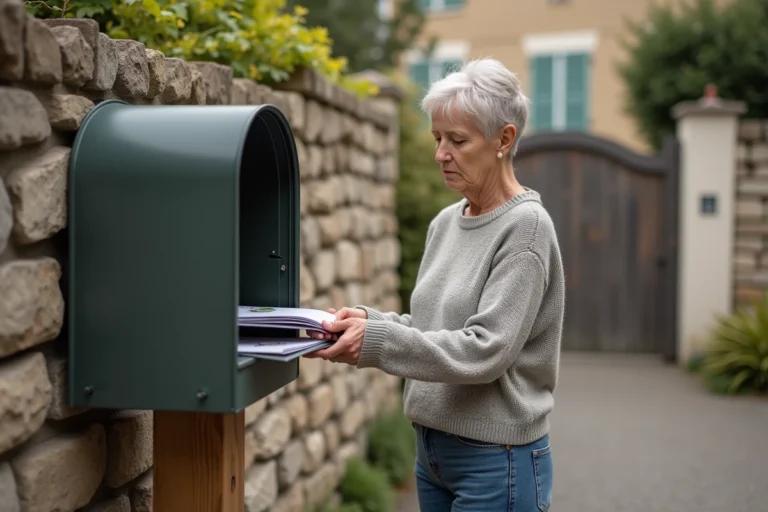
A colleague managing three screens from a smartphone, a small business sorting its incoming mail with an AI assistant, a mail carrier supported by a robot on a logistics route: the tech innovations of 2026 are no longer just showroom concepts. They are changing concrete work practices, often in contexts where reliability matters more than novelty.
Digital sovereignty and everyday tools: what changes in practice
When choosing a messaging service, an online storage space, or an e-administration tool, we rarely take the time to check where the data is transmitted. The topic seems abstract, until the day an American provider changes its terms of use or an internal audit reveals non-compliant hosting.
The French Government positions VivaTech 2026 as a lever to develop sustainable digital services usable in everyday life: trusted cloud, European alternatives to major platforms, control over personal data. The goal is not to replace everything overnight, but to identify critical components (storage, messaging, AI) where choosing a European provider reduces legal or operational risk.
For medium-sized organizations, one can start by mapping the tech solutions from Comptoir d’Encre that meet these needs before launching a complete migration project. The gain is measured less in raw performance than in compliance and long-term autonomy.

Robots and operational AI: the concrete case of La Poste at VivaTech 2026
Humanoid robots are leaving research labs. At VivaTech 2026, the La Poste group presents around thirty innovations, including robots and AI systems deployed among its 227,000 employees. The stated goal: to automate repetitive tasks in logistics and enhance customer relationship support.
What draws attention is the deployment context. We are not talking about a prototype in a showroom, but about tools tested in an organization that handles millions of parcels and letters each week. The on-the-ground constraints (volumes, deadlines, site diversity) naturally filter out gadgets and retain only what can handle the load.
What it means for a smaller team
You don’t need 227,000 employees to benefit from automation. The same principles apply on a smaller scale:
- Identify low-value tasks that consume time each day (email sorting, data entry, supplier follow-ups)
- Test an AI assistant on a limited scope before expanding it, measuring the actual time saved over a typical week
- Ensure that the tool integrates with existing software, because a software robot that requires re-entering data into another system negates the benefit
Feedback varies on this point across sectors, but the logic remains the same: automating a specific flow is better than adopting an underutilized complete suite.
Generative artificial intelligence: distinguishing the useful from the noise
Generative AI occupies a central place in the announcements at VivaTech 2026, alongside quantum technology and digital sovereignty. According to the GTIA 2025 report on technological trends for SMEs, the vast majority of small and medium-sized business leaders claim to know or experiment with AI. The familiarity rate has risen quickly, but familiarity does not mean mastery.
On the ground, the challenge is no longer finding a generative AI tool. There are dozens, integrated into office suites, CRMs, and customer support platforms. The real work lies in calibrating the prompts and verifying the outputs, especially when the produced content engages the company’s liability (customer communication, technical documentation, regulatory responses).
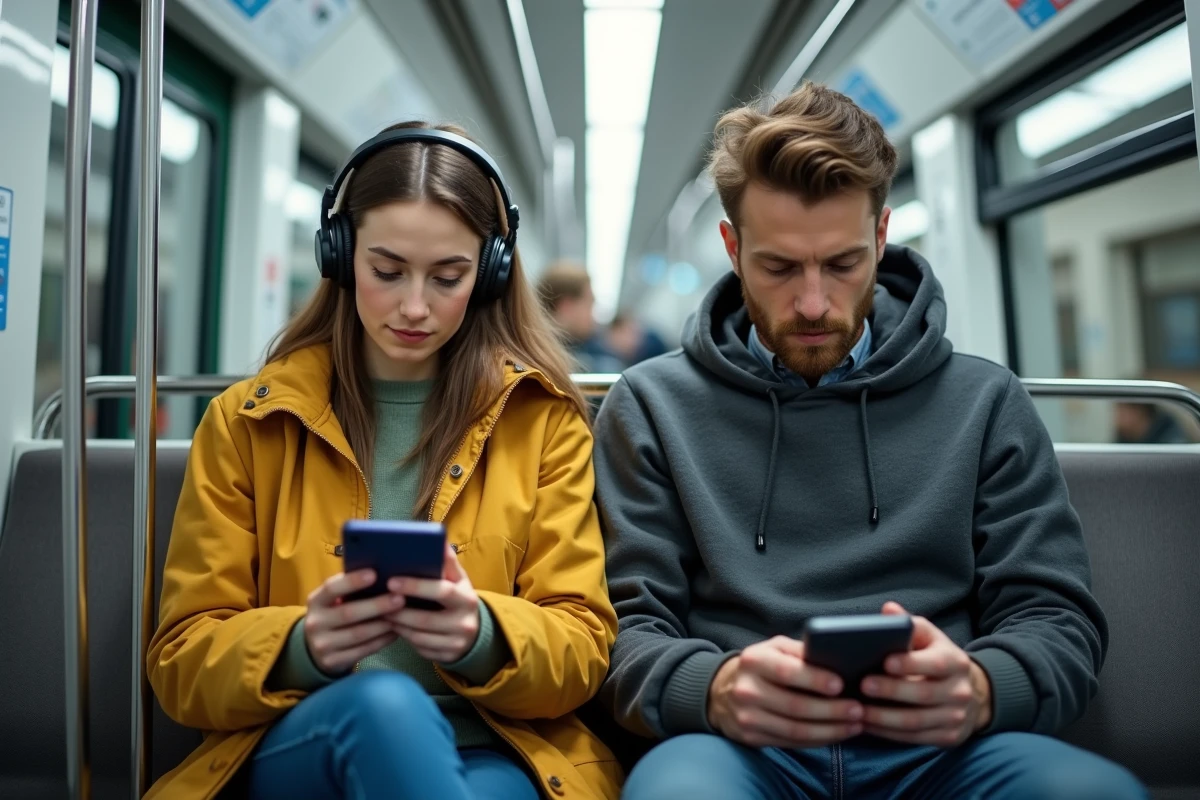
Three reflexes before connecting an AI tool to a business flow
- Define a test set with edge cases (incomplete data, ambiguous requests) to assess reliability before deployment
- Plan for systematic human proofreading of externally directed content during the first weeks
- Document cases where the AI makes mistakes, as these errors outline the real limits of the tool, much more useful than marketing demos
Security of connected objects: an often-overlooked angle in productivity
Temperature sensors in warehouses, connected locks in offices, IP cameras on construction sites: connected objects improve daily management, but each device added to the network expands the attack surface. One installs a smart thermostat to reduce energy bills, forgetting that its firmware hasn’t been updated since installation.
The security of connected objects is not a separate project. It is addressed at the time of device selection, by checking the manufacturer’s update frequency and the ability to segment the network. A connected object without software monitoring becomes an entry point within months.
Smartphones, which now serve as universal remotes to control these devices, also concentrate risks. Management applications installed from unverified sources, default passwords never changed on administration interfaces: these vulnerabilities are common and exploited daily.
Prioritize according to actual exposure
Rather than securing all devices at the same level, one saves time by classifying connected objects by criticality. A light sensor in a meeting room does not deserve the same effort as a camera facing a stock of goods. This prioritization allows for concentrating the security budget where a compromise would have a measurable operational or financial impact.
The tech innovations of 2026 share a common trait: they work when grafted onto a specific need, not when stacked. A well-configured AI assistant on a single business flow, a properly segmented connected object on the network, a sovereign hosting chosen for sensitive data. Digital productivity is built by targeted layers, not by accumulating subscriptions.