
The fees for a Western Union transfer consist of two distinct layers: a fixed or variable commission charged to the sender, and a margin applied to the exchange rate during currency conversion. Understanding this dual pricing allows for an evaluation of the actual cost of a transfer, which often exceeds the amount displayed at the time of validation.
Exchange Margin and Commission: Western Union’s Dual Pricing
The commission corresponds to the fees that Western Union charges to route the funds. It varies depending on the destination country, the amount sent, and the chosen method of receipt (bank account, cash pickup, mobile wallet).
The second layer, less visible, is the margin applied to the exchange rate. Western Union does not convert currencies at the interbank rate (the one displayed on financial markets). The difference between this actual rate and the proposed rate constitutes additional revenue for the operator, sometimes exceeding the commission itself.
Before sending funds, it is therefore useful to calculate the fees for a Western Union transfer by adding the displayed commission and the difference between the proposed rate and the market rate. A transfer with a low commission but with an exchange gap of several percentage points can end up being more expensive than a transfer charging a higher commission with a rate closer to the market.

Western Union Fees by Transfer Method: Online, In-Store, or via the App
The channel used to send money directly affects the amount of fees. Western Union applies different pricing grids depending on whether the transfer is initiated from the website, mobile app, or a physical point of sale.
Online Transfer or via the Mobile App
Digital transfers generally benefit from lower fees compared to in-store transactions. Payment by bank transfer or debit card is cheaper than payment by credit card, which incurs additional fees charged by both Western Union and the card issuer.
In-Store Transfer
In-store fees are almost always higher than online fees, as processing involves an agent and logistical costs. Payment is made in cash, which simplifies the procedure for the sender, but does not offer any pricing advantage.
The method of receipt also plays a role. Cash pickup in the recipient country often costs more than a deposit into a bank account or mobile wallet. The least expensive combination remains an online transfer, paid by bank transfer, to a bank account abroad.
European Regulation and Impact on Euro Transfers
Regulation (EU) 2019/518, fully implemented since 2023, mandates that the fees for cross-border payments in euros within the EU and EEA approach those of a domestic transfer. This regulation has exerted downward pressure on euro transfer fees between countries in the SEPA zone, including for providers like Western Union.
For a euro transfer from one European country to another within the SEPA zone, using Western Union therefore has limited appeal. A standard SEPA transfer, often free or charged a few cents by the bank, achieves the same result in one business day. Western Union remains relevant for corridors outside the euro zone, to Africa, Asia, or Latin America, where local banking networks can sometimes be less accessible.
In parallel, Western Union has increasingly highlighted the all-inclusive price option in its online processes since 2023: commission fees and exchange margin are displayed in a single total cost. This evolution, driven by European transparency requirements, facilitates comparison with other transfer services.
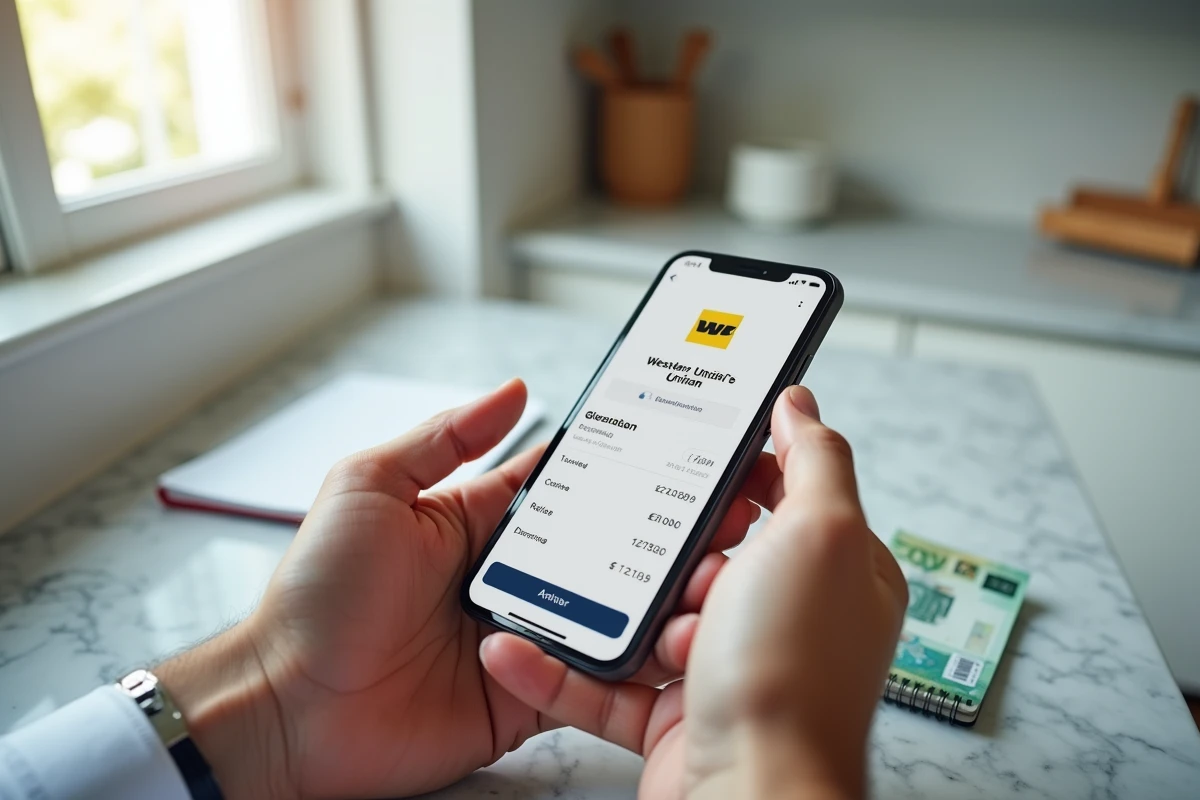
Reducing the Total Cost of a Western Union Transfer: Concrete Levers
Several parameters can significantly reduce the bill for each transfer. None require changing operators.
- Prefer payment by bank transfer or debit card rather than credit card, which accumulates fees from both the operator and the bank issuer.
- Choose a deposit into a bank account or mobile wallet as the method of receipt, as cash pickup is almost always the most expensive channel for the recipient.
- Systematically compare the proposed exchange rate with the interbank rate of the day. A difference of a few points on a large amount can represent a significant sum.
- Send online rather than in-store: digital fees are structurally lower than in-store fees.
For regular senders, consolidating several small transfers into a single larger transfer can also reduce the unit cost, as the commission is not always proportional to the amount.
Western Union vs. Alternatives: When to Change Providers
Western Union has a network of over 500,000 points of sale worldwide, which remains a decisive advantage for transfers to countries where the recipient does not have a bank account. Cash pickup at a local agency is sometimes the only realistic option.
Services like Wise or SEPA bank transfers become more competitive as soon as both parties have a bank account. Multi-currency fintechs generally apply the interbank rate with a fixed and transparent commission, making the total cost predictable.
- Transfer to a bank account in local currency: fintechs often display a lower cost due to a rate closer to the market.
- Transfer for cash pickup in a low-banking country: Western Union remains hard to replace due to its geographical coverage.
- Transfer in euros within the SEPA zone: the classic bank transfer is almost always the cheapest and fastest solution.
The choice of provider therefore depends less on brand preference than on the sending corridor, the method of receipt, and the currency involved. A well-configured transfer with Western Union can cost less than a poorly anticipated transfer via a fintech, and vice versa. The only reliable method remains to compare the total cost, including commission and exchange margin, at the time of sending.