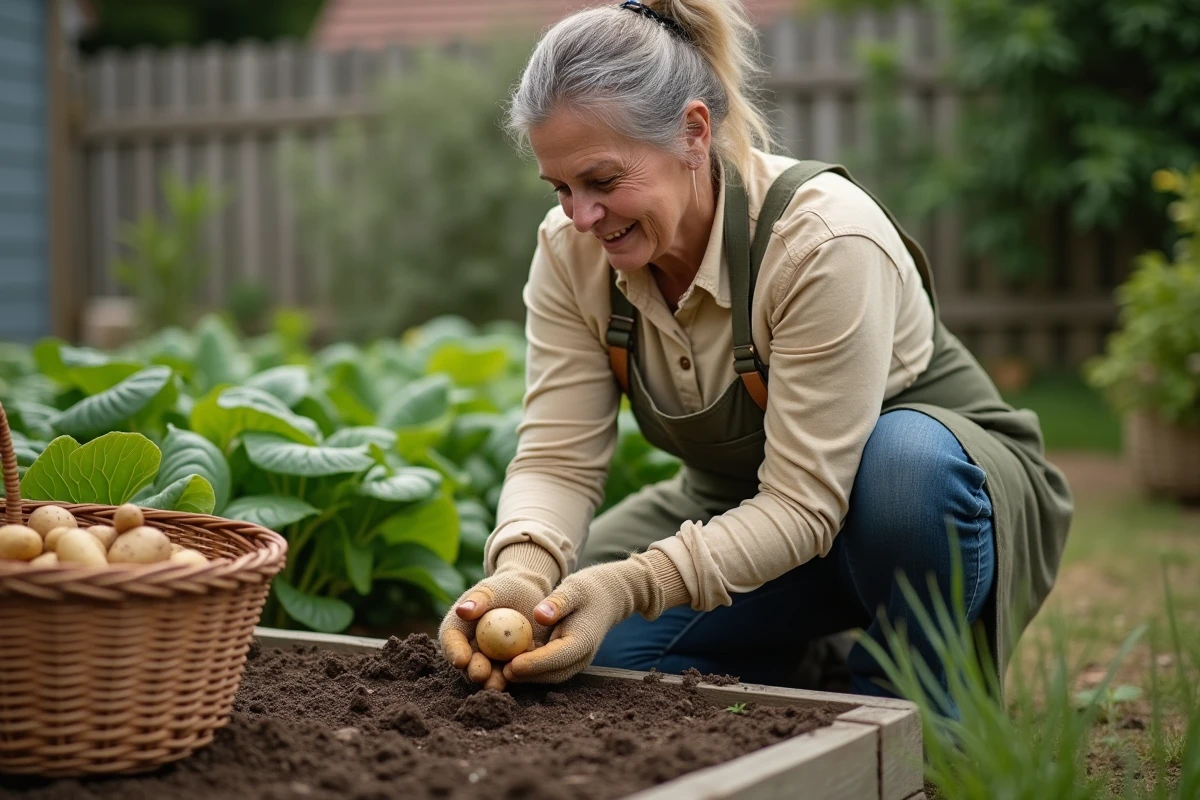
On a three square meter balcony or a vegetable bed squeezed between two flower beds, potatoes remain an accessible vegetable as long as the method is adapted to the available soil volume. Harvesting potatoes in a small space presents a specific constraint: every centimeter of soil must produce, and mistakes in drainage or hilling are paid for more quickly than in open ground.
Drainage and soil structure: the prerequisite that a small surface does not forgive
In open fields, a temporary excess of water spreads over several meters. In a container, a growing bag, or a raised bed, water stagnates at the bottom and the tubers are submerged. Soil that is too waterlogged encourages blight and rot, two enemies that progress quickly in a confined space.
Before even planting, check that the container has functional drainage holes. For a vegetable bed in the ground, mixing coarse sand into the substrate improves drainage. In a growing bag, a layer of clay balls at the bottom is sufficient, provided that the soil above is not compacted.
By consulting Clic Garden’s tips on small space gardening, one can find this emphasis on substrate preparation as a determining factor for final yield.
Feedback varies on the ideal watering frequency, but one guideline works well: stick your finger five centimeters into the substrate. If it’s dry, water. If it’s moist, wait. In containers, regular watering is more crucial than in open ground, because the volume of soil available to store water is limited.
Hilling in small spaces: protecting tubers from light
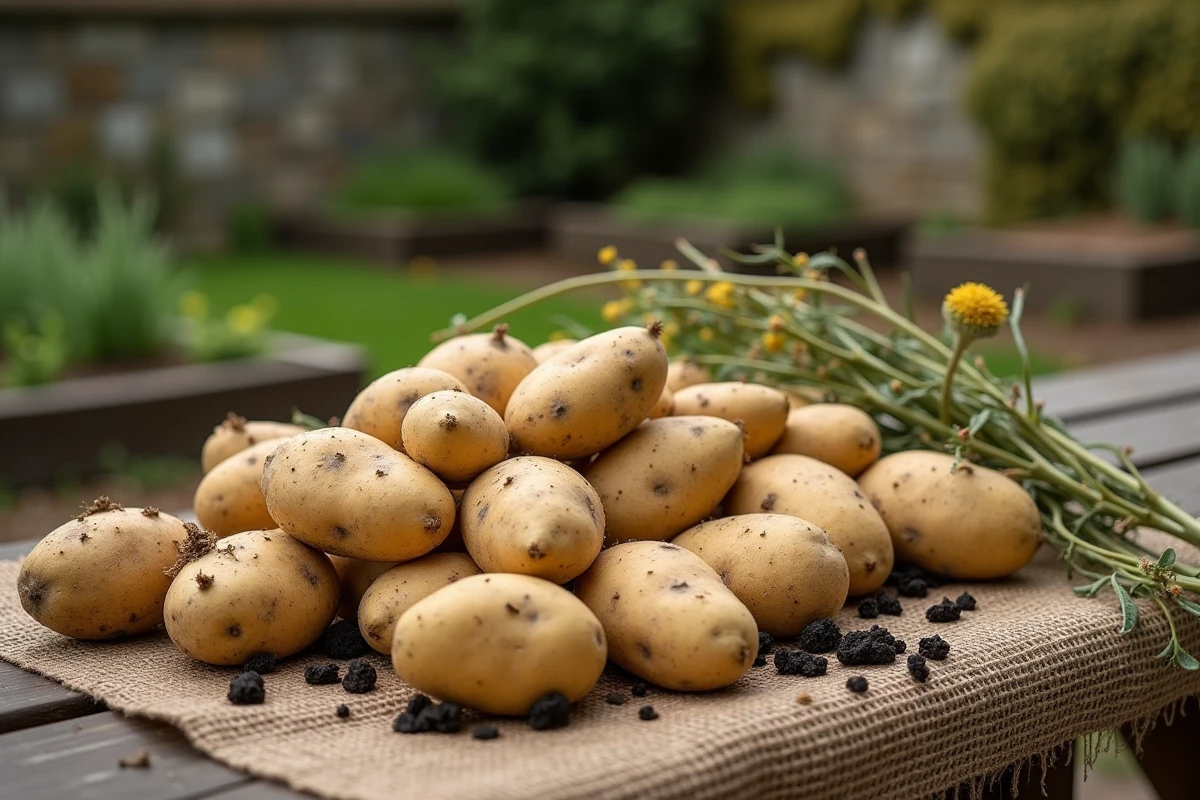
Hilling is not only used to increase yield. Its primary function, often underestimated, is to block light to prevent tubers from turning green. A tuber exposed to sunlight produces solanine, a substance that makes it unfit for consumption. In a small space, the plants are close together and the tubers rise quickly to the surface.
When and how to hill in a restricted space
Hilling should be done as soon as the stems reach about fifteen centimeters. In a vegetable bed, bring soil or compost around the plants, leaving the tops of the leaves exposed. In a bag or tower, add a layer of substrate on top, burying the stems two-thirds of the way.
This successive layering cultivation technique works particularly well in containers. With each addition of material, new rhizomes form in the axils of the buried leaves, multiplying the sites for tuber production without taking up more ground space.
- First hilling when the stems exceed fifteen centimeters above the substrate, covering two-thirds of the stem
- Second hilling two to three weeks later, adding a mix of compost and garden soil
- Third hilling if the container allows, ensuring that the upper foliage remains exposed to light
With each hilling, lightly compact the soil to avoid air pockets that dry out the roots. A simple action that changes the quality of the harvest.
Choosing potato varieties suitable for small spaces
Not all varieties are suitable for cultivation in small spaces. Early potatoes offer a short cycle (a few weeks less than late varieties), which frees up the container or bed for another crop within the same year.
Compact varieties produce less lateral foliage and tolerate proximity to other plants better. For an urban garden or a balcony, this selection criterion weighs as much as taste.
Early planting and staggered harvesting
Planting in several waves spaced a few weeks apart allows for a staggered harvest rather than having all the tubers mature at once. In a small space, this approach also prevents mobilizing the entire area at once.
Start germinating the plants indoors, in a bright and cool place, before planting them in the ground. Short, stout sprouts (not long, white filaments) indicate a ready plant. Plants with too thin sprouts produce weak stems that do not withstand repeated hilling well.
Harvesting potatoes: recognizing the right moment without wasting
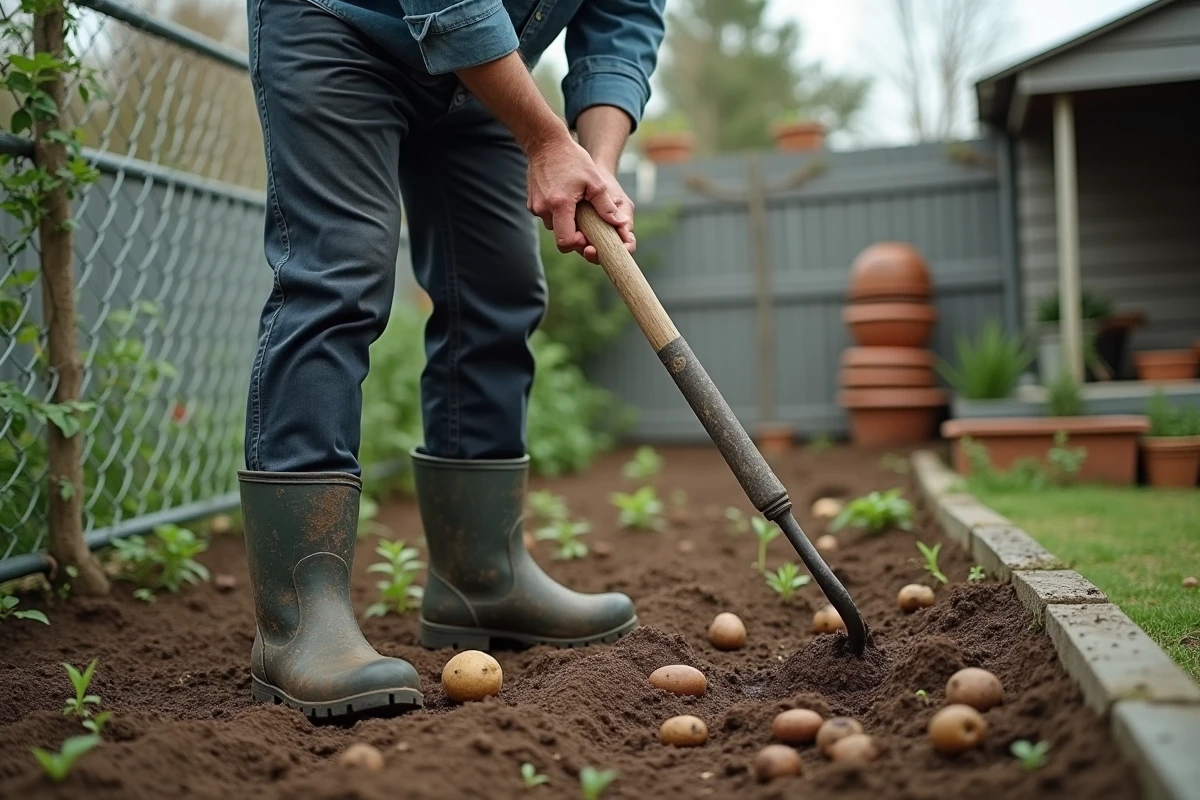
The most reliable signal remains the foliage. When the leaves yellow and begin to lie down, the plant has completed its cycle. Wait another one to two weeks after this stage to allow the skin of the tubers to thicken, which improves their storage.
In containers, harvesting is simpler than in open ground: turn the bag or empty the container onto a tarp. Immediately sorting out green or damaged tubers prevents them from contaminating the others during storage.
- Green tubers: to be discarded, solanine does not disappear with cooking
- Damaged tubers from tools: to be consumed quickly, they do not store well
- Healthy tubers with firm skin: to be stored in a dark, cool, and ventilated place
After harvesting, the used substrate remains usable. You can grow leafy vegetables or radishes to finish the season, provided you add a bit of compost to compensate for the nutrients consumed by the potatoes.
In a small space, each potato harvest teaches something about the substrate, watering, and hilling rhythm that works under specific conditions. The soil of a south-facing balcony does not react like that of a shaded vegetable bed at the end of the day. Keeping track of what has worked, variety by variety and container by container, remains the best tool for improving yield from year to year.