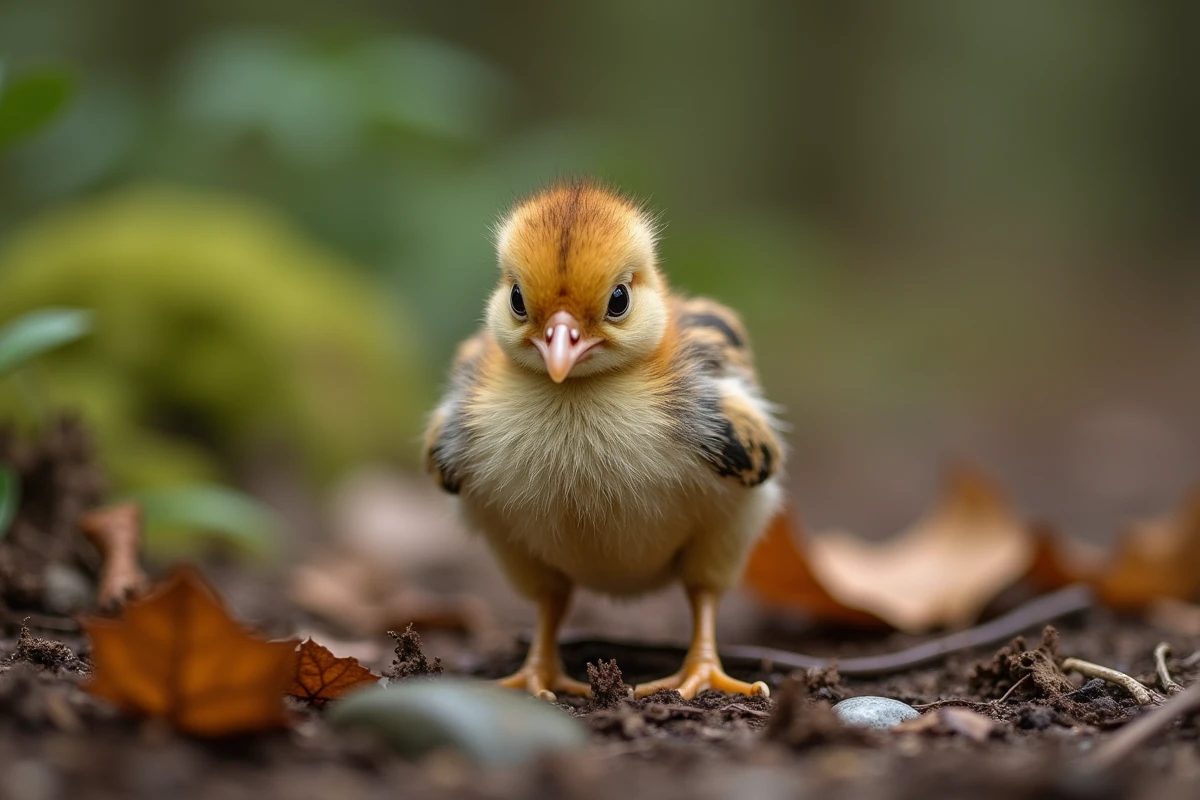
A brown-yellow down barely visible in the tall grasses, a tiny silhouette darting between the stems: the pheasant chick often goes unnoticed, even at a few meters away. Recognizing a baby pheasant and understanding its first weeks of life requires a trained eye, but also a true discipline of observation. Getting too close at the wrong moment can be enough to condemn an entire brood.
Observing a pheasant chick without compromising its survival
Have you spotted a hen pheasant followed by chicks in a field or at the edge of a wood? The first reflex to adopt is not to approach, but to stop. A disturbed pheasant chick leaves cover and becomes an easy prey for crows, raptors, or stray cats.
The hen, when she is brooding or guiding her young, relies on total immobility. She flattens to the ground, and the chicks freeze. If a passerby, a photographer, or a dog forces the group to flee, the dispersion is often permanent. The young, unable to fly during their first two weeks, do not always find their mother again.
For those who want to know everything about the baby pheasant, the basic rule remains distance. In wildlife photography, a long lens (minimum 400 mm) allows documenting behavior without crossing the flight zone. On foot, staying several dozen meters away and never following a moving brood is enough to limit stress.
Departmental hunting associations, like FDC60, also remind of a less visible danger: the mortality of broods during early mowing and harvesting remains very high. Awareness campaigns encourage farmers to report spotted nests, adjust mowing schedules, and maintain refuge strips along the edges of fields. This type of precaution protects the broods much more effectively than direct intervention on the birds.
Recognizing a baby pheasant: plumage, size, and behavior
The freshly hatched pheasant chick resembles a small ball of fawn down, striped with dark brown on its back. This cryptic coloration makes it almost invisible in low vegetation. At this stage, it weighs very little and fits in the palm of a hand.
Down and first feathers
In the first days, the chick has short, dense down with characteristic longitudinal stripes. These stripes clearly distinguish it from a domestic chick (uniformly yellow) or a young gray partridge (lighter down, head marked with rufous).
- From hatching to the first week: striped down, already proportionally long legs, fine and short beak.
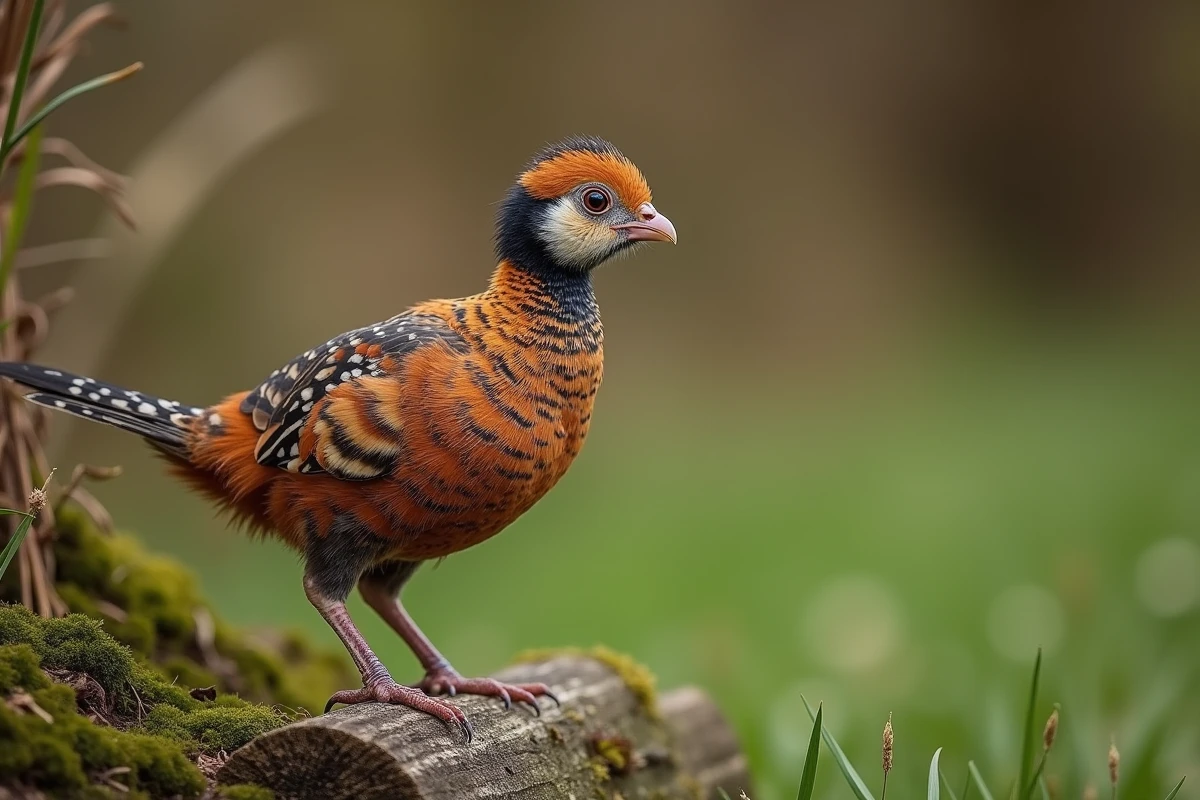
- Between the second and fourth week: appearance of the first flight feathers on the wings, down gradually recedes on the belly and back.
- By six to eight weeks: the young pheasant begins to resemble a dull adult, without the bright colors of the male. Sexual dimorphism only becomes clear after several weeks of growth.
A revealing behavior
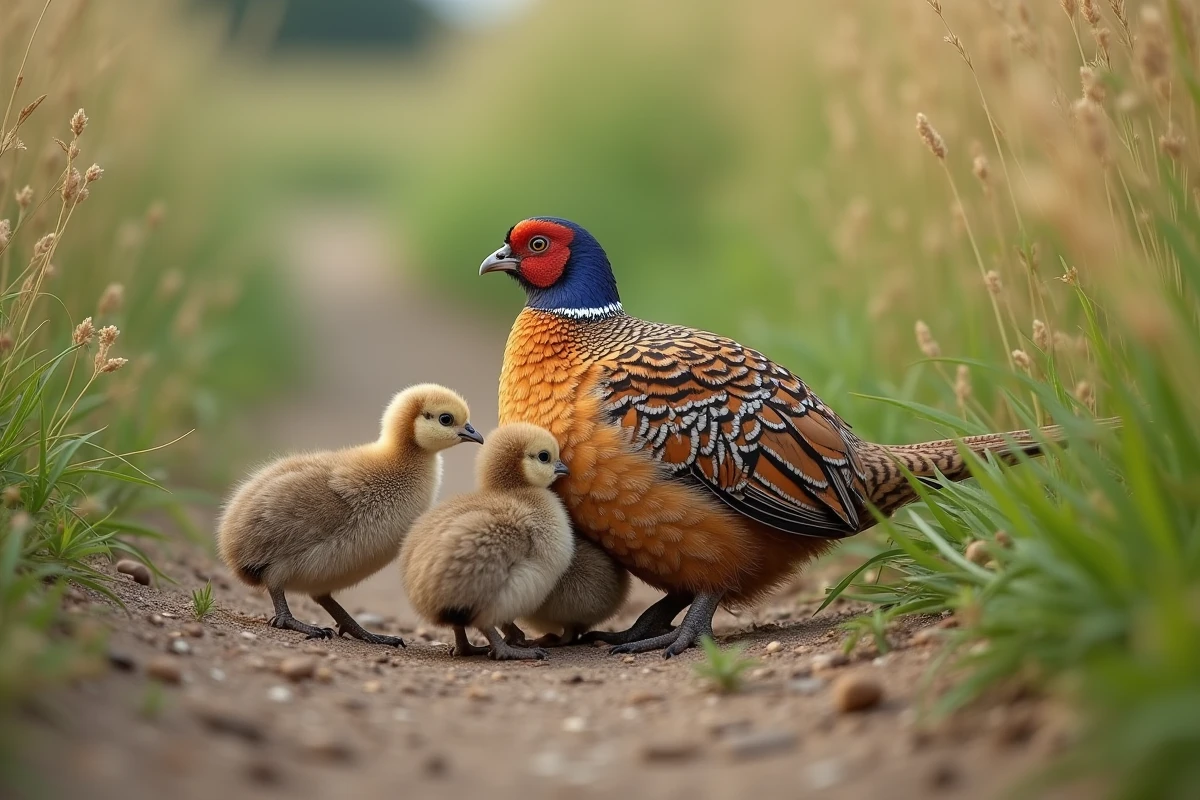
Even before looking at the plumage, the behavior gives away the species. Pheasant chicks run on the ground in a tight group behind the hen, unlike partridge chicks that disperse more widely. When the mother emits a brief alarm call, all the young instantly flatten to the ground. This immobility reflex is their main defense.
Another clue: young pheasants primarily feed on insects during their first weeks. They actively peck at the ground, with quick head movements, and only switch to seeds and plants as they grow.
Growth of the pheasant chick: important stages in breeding
In reintroduction breeding or ornamental breeding, the first weeks determine the robustness of the future adult. Conditions of warmth, feeding, and socialization play a direct role in survival rates after release.
Heat and adoption by a domestic hen
Feedback from specialized breeders converges on one point: pheasant chicks raised under an adoptive bantam hen survive better than those kept solely under a lamp. The hen provides constant thermoregulation, but above all, she transmits escape and feeding behaviors that the lamp cannot replace.
Without this maternal model, young pheasants raised in an incubator develop fewer wariness reflexes. Once released, they struggle to react to predators. This behavioral deficit partly explains the disappointing survival rates observed during certain restocking releases.
Progressive feeding
In the first weeks, a high-protein feed (like starter feed for game) provides the necessary energy for the rapid growth of flight feathers. The transition to a more plant-based diet occurs gradually after the sixth week.
In aviaries, density is a factor often underestimated. Too many young pheasants in a confined space leads to pecking, stress, and uneven growth. Maintaining sufficient space in the aviary and varying structures (low perches, shaded areas) helps limit these problems.
Agricultural mowing and pheasant nests: a real danger
The breeding season of the common pheasant coincides with the mowing season in France. The hen nests on the ground, in meadows, field edges, or fallow land. Her immobility on the nest, which usually protects her from predators, becomes a deadly trap in the face of a mower.
Several departmental federations have documented massive destruction of broods during this period. Preventive measures remain simple but require coordination between farmers and local observers:
- Spot and report nests before mowing, noting their position without approaching within a few meters.
- Mow from the inside out of the field to leave an escape route for the birds.
- Maintain grassy strips along the edges, which serve as refuge for dispersed chicks.
These practices do not guarantee the survival of all broods, but they significantly reduce losses. For reintroduction breeding, the choice of release site also takes these agricultural constraints into account: releasing young pheasants in an intensively mowed area unnecessarily exposes them.
Monitoring the development of a baby pheasant, whether wild or bred, relies on a balance between curiosity and restraint. Each stage of its growth, from striped down to the first flight feathers, is best observed from a distance. Discretion remains, from day one to release, the best tool for protection.